Understanding Basilica Cistern history
Basilica Cistern history belongs to the practical infrastructure of a city as much as to its monumental architecture. Built under Justinian I in the sixth century, the underground reservoir supplied the Great Palace and neighbouring buildings. Its columns supported a space intended to hold water, giving a familiar architectural form a purpose that is different from a palace hall or a place of worship.
The name Basilica refers to the Stoa Basilica formerly located on the site. It is a useful starting point for understanding why a water-storage building carries that name. Begin with the function of the reservoir, then look at the reused stonework and the later restoration as separate chapters. This gives the visit a historical thread without requiring an exact construction year.

Our picks: historic sites with a guide
Choose the reserved-ticket combination for several historic sites. The other guided visits offer small-group or English-speaking guide options; check the cistern admission conditions.
Hand-picked tours, booked through Viator. Prices are indicative starting prices in euros (as of October 2026). Tap a tour for live availability and the current price in your currency.

Historic sites with reserved tickets
- Professional expert guide
- Headsets to hear the guide
- Pre-reserved tickets for the Harem
Reserved tickets also cover the cistern, Hagia Sophia and Topkapı Palace.
Check availability →
Historic sites with an English-speaking guide
- English speaking guide
- Guiding inside the sites
- Coffee and/or Tea
A licensed guide accompanies the visit; cistern admission is not listed as included.
Check availability →
Historic sites in a small group
- Professional Guide
- Small Group
Cistern admission is included only with the all-inclusive option.
Check availability →Guided visits with historical context
Compare small-group routes, pre-reserved admission and guide-led visits with different entry arrangements.
Ancient history and the water supply
The cistern received water through supply conduits and from rain. The historical description includes the Hadrianic water supply among those connections. Seen in that context, the underground hall was part of a wider system: collecting and storing water mattered alongside the buildings that consumed it. The reservoir and the Great Palace therefore belong in the same account of the city, even though they had different functions.
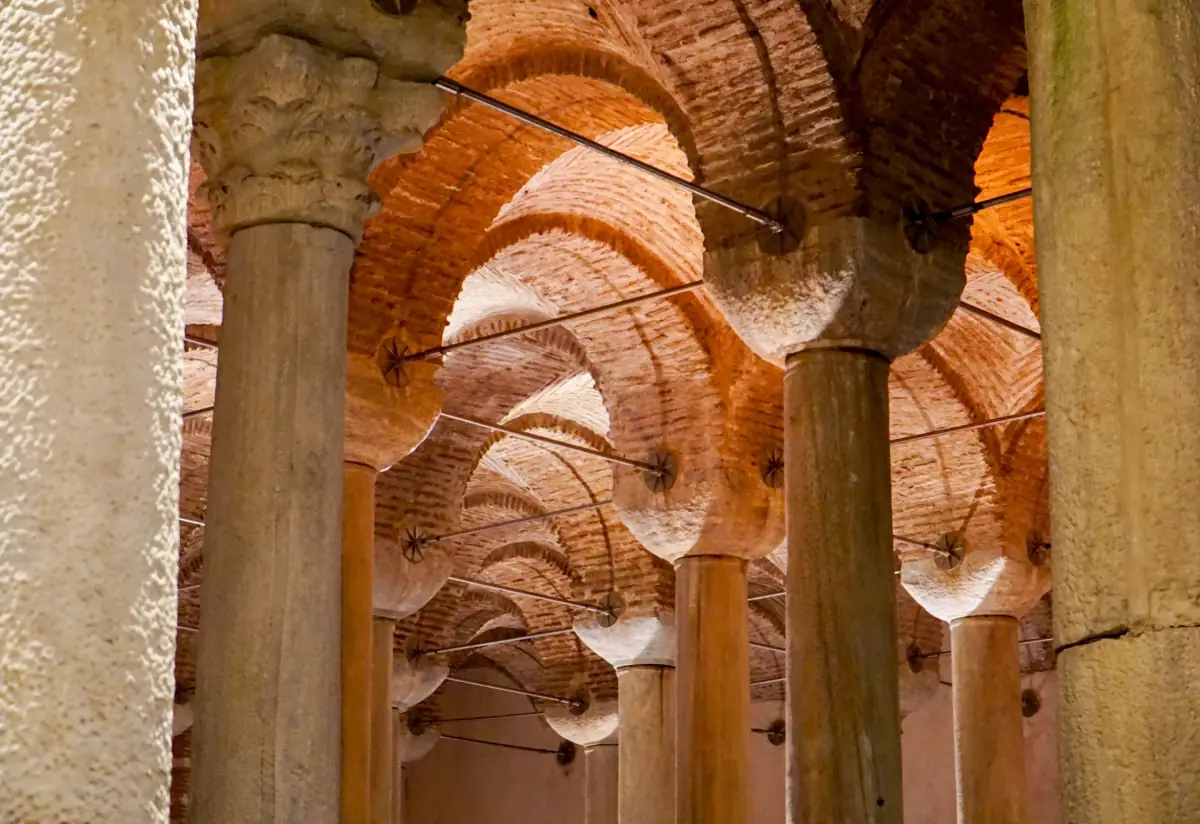
For a visit, this provides a straightforward way to read the architecture. Look first at the space created for storage, then at the supports that allow the roofed interior to extend across it. The historical building description published in 2022 gives 336 columns. Their repetitive arrangement helps make the infrastructure visible as a designed space, rather than merely a backdrop for individual carved details.
Historic buildings
The material is also part of the story. Different reused elements and capitals were incorporated into the building. That variety invites a closer look at the columns without turning every visual difference into a specific claim about an earlier temple. Reuse connects the reservoir with earlier building material, while its water-storage function gives those elements a new architectural setting.
The two Medusa blocks are particularly recognisable examples of carved stone serving as column bases. One is sideways and the other upside down. Their placement and the mythological subject are different questions, so keep the observed arrangement separate from stories about its meaning. The Medusa and architecture page examines those bases and the column arrangement in more detail.
Choosing a guided historical visit
A small-group route with pre-reserved cistern admission and headsets suits visitors who want a broader sequence of historic interiors. Its central meeting arrangement is beside the Hippodrome, opposite the German Fountain; a separate port meeting option is reserved for cruise passengers. Use the meeting instructions belonging to the selected option rather than treating those starts as interchangeable.
Another guided option includes a licensed English-speaking guide, guiding inside the visited sites, and coffee or tea. Its meeting directions lead from Sultanahmet tram station towards the Hippodrome and the green-domed fountain. Choose this format for live historical explanation, and consider entry arrangements separately: those listed inclusions concern the guide and the visit rather than a bundled cistern ticket.
The guide-and-small-group option offers a different admission structure: cistern entry is included when the all-inclusive option is selected. It starts near Sultanahmet tram stop, with the precise meeting point supplied in the booking instructions. Compare these distinctions with the general tour guide or consider a private guided visit if the route needs to be arranged individually.
Restoration and the building seen today
The cistern reopened after restoration on 22 July 2022. That date marks a historical reopening and belongs to the building’s modern conservation story. It should be read alongside, rather than in place of, the sixth-century construction. One describes the original reservoir; the other describes the later work that prepared the monument for renewed public visits.
Read the dated opening-hours guide before setting the visit time. Historical information explains what the building was for, while current ticket instructions organise how to visit it. Keeping these roles clear lets a historical walk remain focused on the water system, reused stone and restoration without turning an old account into a promise about today’s programme.
Frequently asked questions
Who had the Basilica Cistern built?
It was built under Justinian I in the sixth century. Its role was water storage for the Great Palace and neighbouring buildings, supported by conduits and rainwater.
Why is it called Basilica?
The name refers to the Stoa Basilica formerly on the site. It helps explain the name of the reservoir without changing the building’s historical water-storage purpose.
Is cistern admission included in every guided option?
The route with pre-reserved tickets includes cistern admission. For the guide-and-small-group product, admission belongs to the all-inclusive option. The licensed English-speaking guide option lists guiding inside the sites, with entry arrangements considered separately.